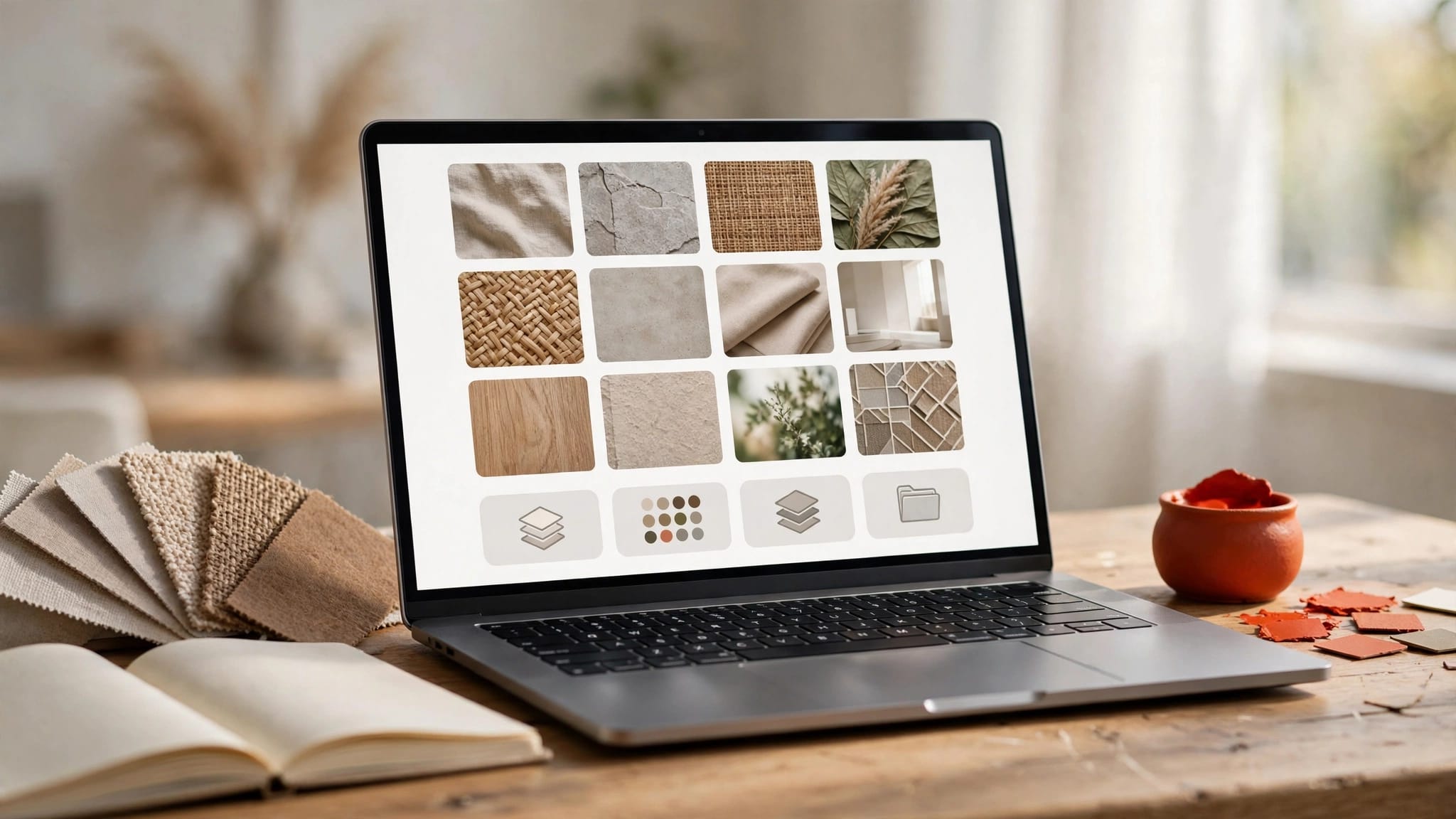

Many small and medium-sized enterprises face a crucial decision when they decide to invest in their online presence: a showcase website or an e-commerce site? This confusion is understandable, given that both solutions promise digital visibility, but serve radically different purposes. A showcase website acts as a digital business card, whilst an e-commerce site is a genuine sales-generating machine. Choosing the wrong solution can mean wasting valuable budget and missing out on growth opportunities. This guide clarifies the key differences and helps you decide which option best suits your business needs.
Contents
- Key points
- What is a showcase website and what are its main features?
- What is e-commerce and how does it work?
- A comparison of the key differences between a showcase website and an e-commerce site
- How to choose between a showcase website and an e-commerce site for your business
- Professional solutions for your corporate and e-commerce websites
- Frequently asked questions about showcase websites and e-commerce
Key Points
| Full stop | Details |
|---|---|
| Objective: Showcase website | Its primary function is to showcase the company’s identity and services without directly selling them. |
| Direct online sales | Buy products or services directly online, with an integrated checkout and payment process. |
| Costs and complexity | A showcase website requires fewer resources and skills, whilst an e-commerce site involves higher costs, greater management demands and stricter security requirements. |
| Goal-based choice | The choice depends on the business objectives and the target audience. |
Key points
| Appearance | Showcase website | E-commerce |
|---|---|---|
| Main objective | Introducing the company and its services | Selling products online |
| Technical complexity | Low, easy to use | High; requires specific skills |
| Initial cost | €800-€3.000 | €3.000-€15.000+ |
| Key features | Information pages, contact details, portfolio | Product catalogue, shopping basket, payments |
| Maintenance | Minimal, occasional updates | Continue: Order and Inventory Management |
| Ideal for | Professionals, B2B companies, services | Shops, retailers, direct sales |
This table shows that the choice between the two options depends mainly on business objectives and available resources.
What is a showcase website and what are its main features?
A showcase website is essentially the digital version of a traditional company brochure. A showcase website serves primarily as an online brochure to showcase your corporate identity and services without directly selling anything. Its primary purpose is to inform visitors about who you are, what you do and how they can contact you.
A typical website structure includes an eye-catching homepage, pages dedicated to the services or products on offer, an ‘About Us’ section that tells the company’s story, a portfolio or gallery of work, and a contact page with a form and contact details. Some showcase websites also include a blog to improve SEO rankings and demonstrate expertise in the sector.
There are numerous benefits of a showcase website for SMEs. Firstly, it represents an affordable investment that provides a professional online presence without prohibitive costs. Secondly, day-to-day management requires minimal technical skills, allowing the owner to focus on their core business. Thirdly, development times are short, often taking just 2–4 weeks for a complete project. Finally, it offers immediate credibility: nowadays, a company without a website appears unprofessional in the eyes of potential customers.
However, these limitations must be carefully considered. A showcase website does not generate direct sales; instead, it acts as a lead generation tool that requires offline follow-up. Interactivity is limited compared with more complex platforms, and scalability is restricted should the company subsequently decide to expand its functionality.
Pro tip: If your business mainly attracts customers through word of mouth or personal connections, a well-optimised showcase website can significantly increase these organic leads without the complexity of running an online shop.
The features of corporate websites include responsive design for mobile devices, optimised loading speeds, SEO-friendly content and social media integration. These elements transform a simple showcase website into an effective marketing tool that works round the clock to attract new customers.
For professionals such as solicitors, architects and consultants, or B2B companies that sell through bespoke negotiations, a showcase website is the ideal solution. It provides the necessary digital presence without the operational complexity of an e-commerce site, whilst keeping the sales process within the traditional channel where the company already excels.
What is e-commerce and how does it work?
An e-commerce platform is a comprehensive digital platform that enables customers to purchase products or services directly online, completing the entire process from discovery to payment without human intervention. An e-commerce website enables direct online sales with features such as a product catalogue, shopping basket and integrated payment gateway.
The core features of an e-commerce site include a product catalogue organised by category with detailed product pages, a shopping basket system that saves selections, a secure checkout with SSL encryption, integration with multiple payment systems such as credit cards, PayPal and bank transfers, real-time stock management, a dispatch system with automatic cost calculation, a customer portal for tracking orders, and marketing tools such as discount codes and loyalty schemes.

The technical complexity of an e-commerce site far exceeds that of a showcase website. It requires ongoing maintenance for security updates, regular backups of transactional data, performance monitoring to identify bottlenecks, day-to-day management of orders and returns, and regulatory compliance regarding privacy and online payments. This complexity results in significant monthly operating costs.
Pro tip: Before launching an e-commerce site, test the demand for your products via existing marketplaces such as Amazon or eBay. If sales look promising, investing in a proprietary platform makes strategic sense.
The competitive advantages of an e-commerce business are substantial. It generates direct revenue 24/7 without the need for dedicated staff, expands the geographical market beyond local boundaries, gathers valuable data on customers’ purchasing behaviour, reduces operating costs compared to a physical shop, and allows for rapid scalability as demand grows. A well-managed e-commerce site can transform a local business into a national or international one.
The most widely used platforms for building e-commerce websites include WooCommerce for WordPress, which is ideal for SMEs seeking flexibility; Shopify for all-in-one hosted solutions; PrestaShop for complex product catalogues; and Magento for enterprises with advanced requirements. The choice depends on budget, in-house technical expertise and growth objectives.
| Platform | Monthly cost | Ideal for | Complexity |
|---|---|---|---|
| WooCommerce | €20-€100 | Flexible SMEs | Media |
| Shopify | €29-€299 | Quick start-ups | Low |
| PrestaShop | €50-€200 | Extensive catalogues | High |
| Magento | €500+ | Enterprise | Very high |
Ideal use cases for e-commerce include retail shops looking to expand online, manufacturers wishing to sell directly to consumers by cutting out the middleman, niche retailers with specialised products, and companies with extensive catalogues that benefit from digital search and filtering. If your business model is based on repeat and standardised transactions, e-commerce is probably the right choice.
A comparison of the key differences between a showcase website and an e-commerce site
Understanding the key differences between these two options is essential for making an informed decision. Cost, management complexity and business objectives These are crucial factors when choosing between a showcase website and an e-commerce site.
From an economic point of view, the differences are substantial. A showcase website requires an initial investment of between €800 and €3,000, with annual maintenance costs of €100–€300 for hosting and the domain name. An e-commerce site starts at €3,000 for basic solutions, easily reaching €15,000 or more for bespoke platforms, with monthly operating costs of €200–€1,000 including dedicated hosting, SSL certificates, payment gateways and marketing tools.
Functionality is the most obvious distinguishing feature. A showcase website offers static or semi-static pages with informational content, contact forms for lead generation, image and video galleries, basic social media integration, and a blog for content marketing. E-commerce includes all of this plus a dynamic product catalogue, shopping basket and wishlist management, a secure payment system, order and delivery tracking, product reviews and ratings, and advanced conversion analytics.

| Criterion | Showcase website | E-commerce |
|---|---|---|
| Objective | To provide information and generate leads | Sell directly |
| Initial investment | €800-€3.000 | €3.000-€15.000+ |
| Monthly costs | €10-€30 | €200-€1.000+ |
| Time taken to complete | 2–4 weeks | 2–6 months |
| Required skills | Home | Advanced |
| Typical ROI | Indirect, lead generation | Direct, immediate sales |
| Maintenance | Occasional | Daily |
The user experience is radically different. On a showcase website, visitors browse informative content, assess what the company has to offer, and decide whether to contact the company via a form or by telephone. The conversion process takes place offline. On an e-commerce site, the user searches for specific products, compares options, adds items to their basket, completes the checkout and receives immediate confirmation. The entire experience is self-service and instant.
Content management involves varying degrees of complexity. A showcase website requires occasional updates when services, prices or company information change. An e-commerce site requires ongoing management: adding new products, updating stock levels, adjusting prices and promotions, processing orders, handling returns and refunds, and responding to customer reviews. This operational difference has a significant impact on the human resources required.
The impact on marketing varies considerably. A showcase website supports SEO strategies to attract organic traffic, content marketing via blogs, and social media marketing to maximise reach. An e-commerce site requires all of this, plus email marketing for abandoned trolleys, retargeting adverts for visitors who haven’t made a purchase, loyalty schemes for repeat customers, and continuous optimisation of the conversion funnel. The marketing investment for an e-commerce site is typically 3–5 times higher.
When it comes to business models, the showcase website is ideally suited to professional services firms, consultants and freelancers, B2B businesses with long sales cycles, local businesses that prefer face-to-face interaction, and companies with highly customised products. E-commerce excels for retailers with standardised catalogues, manufacturers selling directly to the public, multi-channel retailers, and scalable businesses with profit margins that justify the investment in technology.
Deciding between a showcase website and an e-commerce site requires an honest assessment of your business model, the resources available to you and your medium-term objectives. There is no universally correct choice; only the one that best aligns with your business strategy.
How to choose between a showcase website and an e-commerce site for your business
The decision between these two options should be based on objective criteria rather than personal preferences or passing fads. Aligning the choice of website By aligning with business needs and growth plans, it ensures optimal investment and tangible results.
Here is a decision-making framework broken down into practical steps:
-
Analyse your immediate sales targets. If your business generates revenue mainly through bespoke contracts, consultancy work or tailor-made services, a showcase website is sufficient. If you sell standardised products with fixed prices and a repeatable purchasing process, an e-commerce site becomes essential.
-
Assess the profile of your ideal customer. B2B clients who require detailed quotations and wish to negotiate prefer direct contact facilitated by a showcase website. End consumers looking for value for money and immediate purchases expect comprehensive e-commerce functionality.
-
Work out a realistic budget. It includes not only the initial development costs, but also annual maintenance, digital marketing and human resources for day-to-day management. An underfunded e-commerce site is more likely to fail than a well-executed showcase website.
-
Consider your team’s technical skills. A showcase website can be managed by staff with basic digital skills following a short training course. An e-commerce site requires more advanced skills or the technical management to be outsourced to professionals.
-
Plan for future scalability. If you’re planning to expand your product catalogue rapidly or enter new geographical markets, investing directly in e-commerce will save you from costly migrations later on. If your growth is set to be gradual and relationship-based, start with a showcase website.
-
Analysise your direct competitors. If your main competitors are selling successfully online, staying offline means losing market share. If, on the other hand, the sector is still traditional, a well-positioned showcase website can give you a competitive edge without excessive risk.
Pro tip: Don’t underestimate the hybrid option. Many SMEs start with a showcase website to build their online presence and trust, then add an e-commerce section for selected products once the market has been validated. This strategy reduces the initial risk.
Common mistakes to avoid include choosing e-commerce simply to follow trends without having products suitable for online sale, underestimating the ongoing operational costs of an e-commerce business, creating a showcase website that is too static and fails to generate qualified leads, and failing to plan a digital marketing strategy suited to the chosen platform.
The reasons for creating a professional website go beyond simply having an online presence. A well-designed website becomes a strategic asset that works constantly to attract customers, build credibility and support business growth. The choice between a showcase website and an e-commerce site determines how this asset will generate value for your business.
If you still have any doubts after this analysis, consulting an experienced professional is a wise investment. A qualified webmaster can assess your specific situation, suggest the best solution and implement it correctly, thereby avoiding the costly mistakes that many SMEs make when tackling these projects without expert guidance.
Professional solutions for your corporate and e-commerce websites
Now that you’ve clarified the differences between a showcase website and an e-commerce site, the next step is to turn this knowledge into an effective online presence for your business. Choosing the right partner to bring your web project to life makes all the difference between an investment that delivers results and one that falls short of expectations.
How freelance webmaster specialising in website design, I offer bespoke solutions for both showcase websites and fully-fledged e-commerce platforms. With over 20 years’ experience in WordPress, WooCommerce and PrestaShop, I can guide you in choosing the option best suited to your needs and create a project that reflects your corporate identity and supports your business objectives. My web services for businesses include initial strategic consultancy, bespoke technical development, integrated SEO optimisation and ongoing post-launch support. Whether you need a stylish and functional showcase website or a comprehensive e-commerce platform If you want to sell online, I can help you develop the right solution to grow your digital presence and boost your business opportunities.
Frequently asked questions about showcase websites and e-commerce
Which is cheaper: a showcase website or an e-commerce site?
A showcase website is significantly cheaper, with initial costs ranging from €800 to €3,000 and annual maintenance costs of €100–€300. An e-commerce site requires an initial investment of €3,000–€15,000+ and monthly running costs of €200–€1,000 for hosting, security and management. The difference reflects the technical and functional complexity of the two solutions.
Can a showcase website be converted into an e-commerce site at a later date?
Yes, it is technically possible, but it depends on the original platform. A showcase website built on WordPress can be expanded with WooCommerce relatively easily. Websites on proprietary platforms may require a complete rebuild. Planning for this possibility from the outset reduces the costs and complexity of any future migration.
How does the type of business affect the choice of location?
The business model is the key factor. Service providers, consultants and B2B businesses with bespoke sales benefit most from showcase websites. Retailers, manufacturers with standardised catalogues and multi-channel retailers need e-commerce to compete effectively. Consider how your customers prefer to shop.
Do you need a professional to help you decide between the two options?
It is strongly recommended that you consult an expert if you have no digital experience. A professional will analyse your business model, objectives and resources to suggest the best solution. This initial investment in consultancy prevents costly mistakes and ensures that your web project genuinely supports your business’s growth. The website development costs They vary significantly depending on the level of complexity and customisation required.
What ongoing costs can you expect with an e-commerce business?
In addition to hosting (€50–€200 per month), you should factor in payment gateways with fees of 2–3 per cent per transaction, SSL certificates (€50–€200 per year), backups and security (€30–€100 per month), platform and plugin updates, stock and order management, and digital marketing (variable budget but essential). These operating costs are proportional to sales volume and must be carefully planned for in the business plan.