


In 2026, e-commerce is an indispensable strategic tool for Italian small and medium-sized enterprises. Many entrepreneurs still believe that only major brands can benefit from online sales, yet The Italian e-commerce market has reached 62.3 billion euros in 2025, representing a 7% increase on the previous year. This guide explains why and how SMEs can leverage e-commerce to boost turnover, attract new customers and compete effectively in an increasingly digital market.
Contents
- Summary of the key points
- Why e-commerce is essential for Italian SMEs
- How to maximise the benefits with an effective e-commerce strategy
- Differences between products and services in e-commerce and their implications
- How to start and grow your e-commerce business in 2026
- Professional services to help you build a successful e-commerce business
- Frequently asked questions about why to set up an e-commerce site
Summary of the key points
| Full stop | Details |
|---|---|
| Consolidated growth | The Italian e-commerce market is worth over 62 billion euros, with steady annual growth of 7% |
| Benefits for SMEs | Increased turnover, customer acquisition and access to global markets without geographical barriers |
| A successful digital strategy | SEO, business analytics and targeted campaigns guarantee a return on investment of up to 21 times the initial investment |
| Products vs services | Products account for 64% of the market, with growth of 6%; services account for 36%, with growth of 8% |
| Tools and platforms | Technological choices, analytics and continuous optimisation will determine success in 2026 |
Why e-commerce is essential for Italian SMEs
The Italian retail landscape is undergoing a profound transformation. The B2C e-commerce market reached €62.3 billion in 2025, marking a 7% increase compared with 2024. These figures demonstrate that online sales are no longer an option, but a competitive necessity.
Italian SMEs that integrate e-commerce into their business strategy enjoy tangible and measurable benefits. Direct access to the end consumer eliminates costly intermediaries and enables them to build lasting relationships with customers. The ability to sell products and services 24 hours a day, seven days a week, radically transforms the traditional business model.
Online visibility is a key factor in success. Creating a website for your business It means creating a global showcase that can be accessed from any device. Italian consumers are increasingly searching online before making a purchase, even when they go on to complete the transaction in a physical shop.
The documented success stories show impressive results:
- Companies that have implemented effective e-commerce strategies have recorded increases in turnover of more than 30%
- Acquiring new customers via digital channels costs, on average, 40% less than traditional methods
- Customer loyalty is enhanced through personalised communications and digital loyalty programmes
- Analysing sales data enables faster and more accurate strategic decisions
“E-commerce does not replace physical shops; it enhances them. It offers SMEs the chance to compete on limited budgets in markets that were previously out of reach.”
In 2026, competitiveness will inevitably depend on a digital presence. Businesses that ignore this trend risk losing significant market share to more agile and technologically advanced competitors. The Italian e-commerce market continues to expand, creating opportunities for those who can seize them with strategy and professionalism.
How to maximise the benefits with an effective e-commerce strategy
Simply having an e-commerce site is not enough. You need an integrated strategy that combines technology, marketing and operational management to achieve tangible results. The data shows that companies which invest in optimisation and constant monitoring far outperform those that merely put a product catalogue online.
SEO is the cornerstone of generating qualified traffic. A long-established shop on Lake Garda has increased its turnover by 30% thanks to targeted SEO strategies, whilst a fashion brand generated over 170,000 euros in sales with an MER of 11x and a ROAS of 21x. These figures are no coincidence, but the result of careful planning and continuous optimisation.
Business analytics distinguishes profitable e-commerce businesses from those that struggle to turn a profit. Monitoring key metrics such as conversion rate, average order value and customer acquisition cost enables you to quickly identify areas for improvement and opportunities for growth.
To implement a successful strategy, follow these steps:
- Analyse your target audience and study the online purchasing behaviour of your potential customers
- Invest in website positioning and SEO to ensure organic visibility on search engines
- Optimise the user experience with responsive design, intuitive navigation and a streamlined checkout process
- Implement analytics tools to track every interaction and conversion
- It continuously tests different product, pricing and communication strategies to maximise results
- Set up an email marketing system to nurture leads and re-engage inactive customers
The e-commerce website development It requires specific technical skills, but also strategic vision. The platform must support advanced features such as real-time inventory management, integration with secure payment systems and the automation of fulfilment processes.
Pro tip: Allocate at least 20% of your initial budget to SEO optimisation and data analysis. This investment will pay for itself quickly through qualified organic traffic and decisions based on hard data rather than gut feelings.
Customer acquisition campaigns must be measurable and scalable. Start with modest budgets to test different channels (Google Ads, Facebook, Instagram), identify the ones that perform best for your sector, and gradually scale up your investment in the most successful channels. The e-commerce SEO case study demonstrates that even small businesses can achieve extraordinary results with the right strategy.
Differences between products and services in e-commerce and their implications
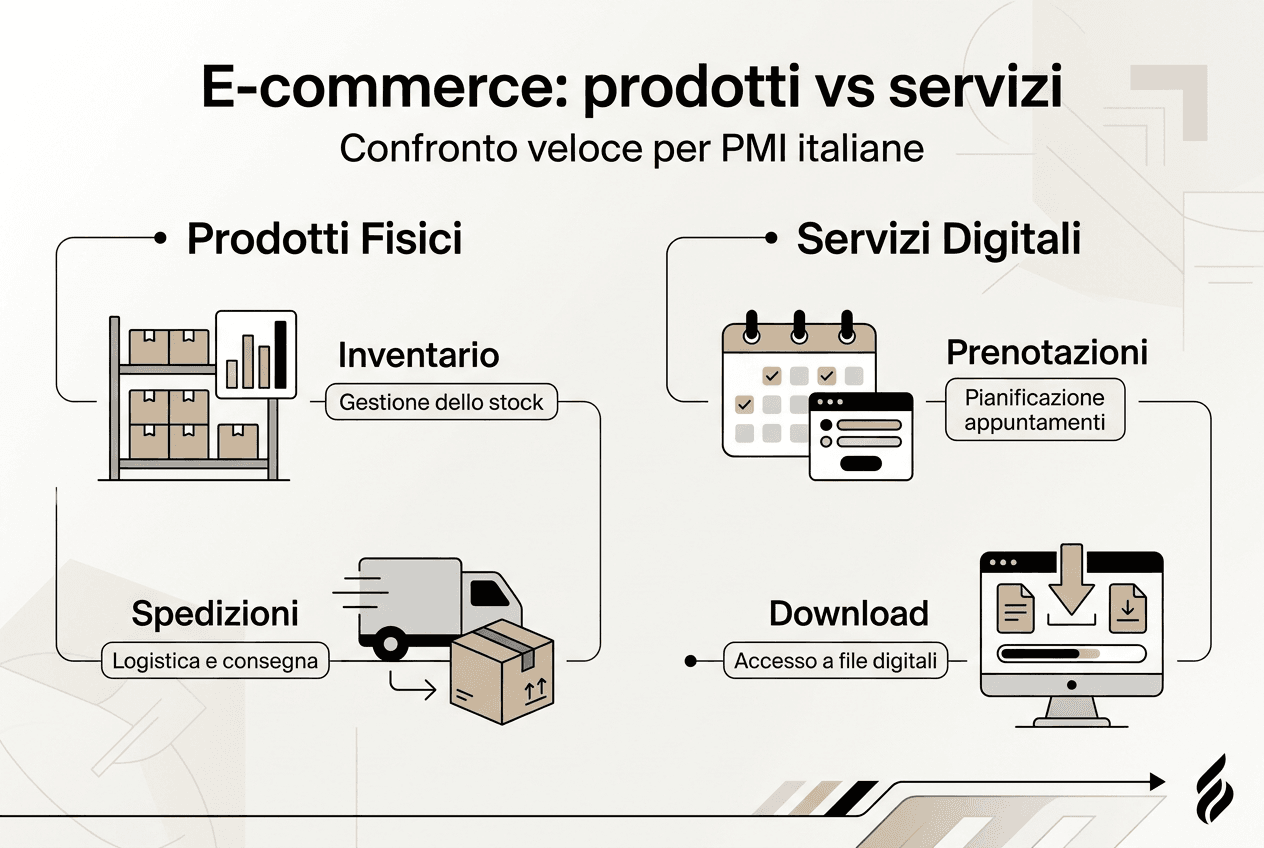
The Italian e-commerce market is divided into two broad categories, each with its own distinct dynamics. Products account for 40 billion euros, with growth of 6%, whilst services total 22 billion, with growth outpacing that of 8%. Understanding these differences helps in planning appropriate investments and operational strategies.
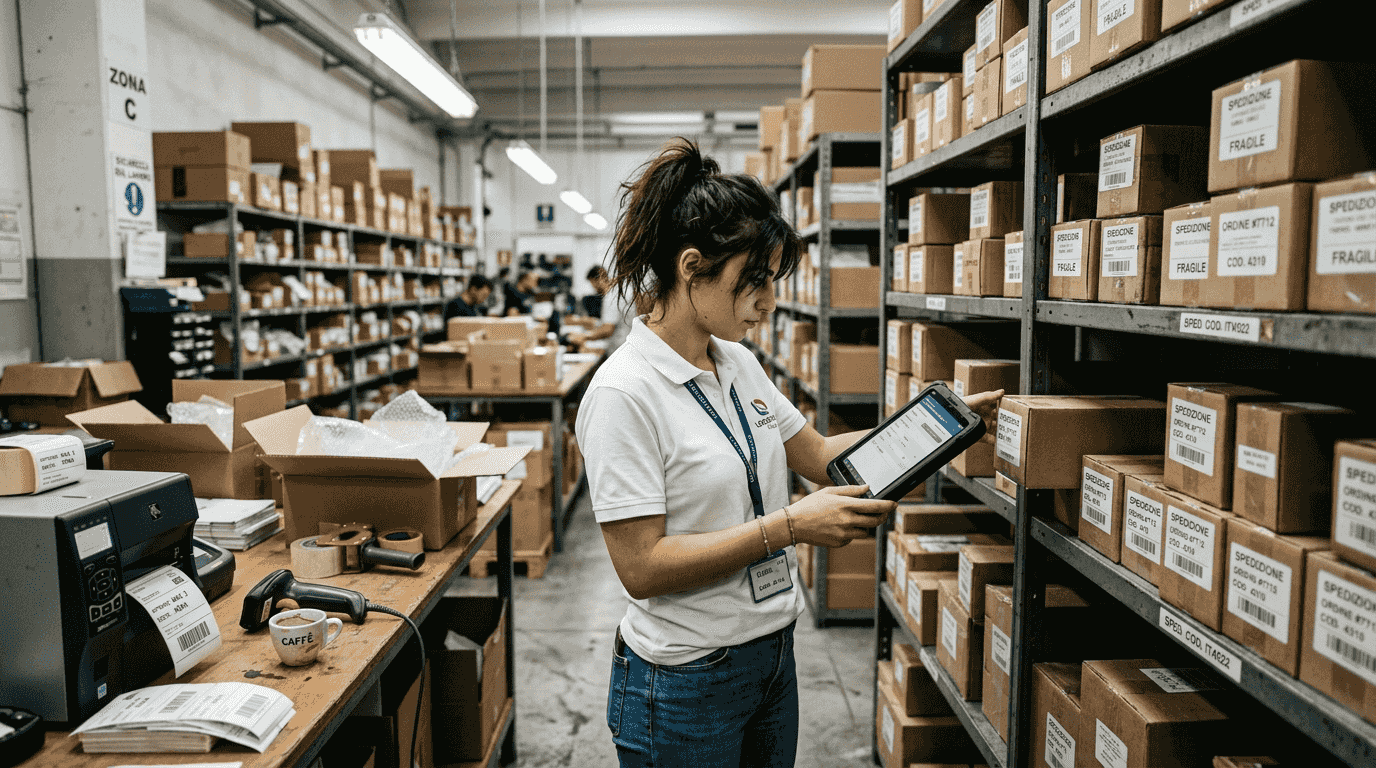
Selling physical products involves managing stock, logistics and deliveries. You need to take into account storage costs, delivery times and returns management. Margins may be lower, but the potential sales volume is generally higher. Visual presentation is crucial: professional photos, detailed descriptions and verified reviews have a direct impact on conversion rates.
Services, on the other hand, eliminate many logistical complexities but require different approaches. Online bookings, availability calendars and pre- and post-sales communication become key elements. Margins are often higher, and scalability depends on the ability to standardise and automate service delivery.
| Feature | Physical products | Digital services |
|---|---|---|
| Inventory management | Required due to storage costs | Not required or minimal |
| Logistics and shipping | Crucial, with an impact on margins | Not available or digital only |
| Average margin | 20-40% typically | 40-70% potentially |
| Scalability | Constrained by production capacity | High with automation |
| Customer experience | Focus on product and delivery | Focus on relationships and results |
The strategic implications are significant. As regards products, investing in web services for businesses which include advanced catalogue management and integration with suppliers, become a priority. When it comes to services, personalising the customer experience and building trust through valuable content make all the difference.
Some practical considerations for both categories:
- The products benefit from SEO strategies focused on optimised product pages and informative content
- Services require effective storytelling and a demonstration of expertise through case studies and testimonials
- Both require corporate websites with specific features solid technical expertise and professional design
- Page load speed and the mobile experience are critical regardless of the category
The rapid growth of online services reflects changing consumer habits. Consultancy, training, bookings and digital subscriptions represent expanding opportunities for SMEs that are able to adapt their offerings to the digital format. The e-commerce market for products and services offers scope for both categories, with profitable niches in every sector.
How to start and grow your e-commerce business in 2026
Launching a successful e-commerce business requires methodical planning and the right technological choices. Forecasts for 2026 point to a market worth over 40 billion for these products, with annual growth of 6–7%, confirming real opportunities for those entering the market with a clear strategy.
The choice of platform determines future capabilities and operating costs. WordPress with WooCommerce offers flexibility and low costs for SMEs, whilst PrestaShop provides advanced features for complex product catalogues. Shopify is a hosted alternative that offers a quick set-up but less control. Assess your current needs and expected growth over the next three years.
Follow this step-by-step guide to launch your e-commerce business:
- Set measurable targets (turnover, number of customers, profit margin) and realistic timelines for achieving them
- Choose the technology platform based on your budget, in-house expertise and the complexity of your product catalogue
- Design a mobile-first user experience, bearing in mind that over 60% of traffic comes from smartphones
- Implement secure and diverse payment systems to maximise conversions at checkout
- Set up analytics and tracking tools to monitor every stage of the sales funnel
- Create SEO-optimised content for products, categories and blog posts to generate qualified organic traffic
- Launch customer acquisition campaigns on selected channels with a modest initial test budget
- Analyses data, optimises underperforming elements and scales investment in high-performing channels
The e-commerce website development A professional website includes crucial technical features: an SSL certificate for security, automatic backups, protection against attacks, and optimised loading speed. These elements influence both conversion rates and search engine rankings.
Pro tip: Use Google Analytics 4 and heatmap tools to gain a clear understanding of exactly how visitors interact with your website. Identify points where visitors drop out of the purchasing process and test specific solutions for each issue identified.
Effective promotion combines organic and paid channels. SEO generates sustainable traffic in the medium to long term, whilst paid campaigns accelerate initial results and enable rapid testing. Social media builds communities and trust, whilst email marketing maintains relationships with existing customers.
| Stage | Priority activities | Key metrics | Timeline |
|---|---|---|---|
| Launch | Technical setup, basic catalogue, initial content | Traffic, time spent on the site | 1–2 months |
| Growth | SEO, paid campaigns, UX optimisation | Conversions, CAC, AOV | 3–6 months |
| Consolidation | Automation, customer loyalty, expansion | LTV, retention, margin | 6–12 months |
| Scaling | New markets, products and channels | Revenue, market share | 12+ months |
Creating a professional website This is merely the starting point. Success depends on continuous optimisation, listening to customers and adapting quickly to market trends. The 2026 e-commerce forecasts confirm that those who invest now in a structured digital presence will reap increasing benefits in the years to come.
Professional services to help you build a successful e-commerce business
Turning the vision of a profitable e-commerce business into reality requires technical expertise, strategic experience and ongoing support. Once you have explored the opportunities and strategies, the next step is to put the solution best suited to your business into practice.
With over 20 years’ experience in web development, I offer bespoke e-commerce website development for Italian SMEs. Each project is tailored to the client’s specific requirements, incorporating professional design, advanced functionality and SEO optimisation right from the development stage.
Web services for businesses include strategic consultancy to identify the most effective digital business model, development on platforms such as WordPress, WooCommerce and PrestaShop, and ongoing support to ensure optimal performance. The aim is to create solutions that generate measurable results in terms of traffic, conversions and turnover.
How freelance webmaster specialising in website design, I provide comprehensive support from the initial design stage right through to day-to-day management, allowing you to focus on your business whilst the technology works for you. Contact me for a personalised consultation and find out how to take your business to the next level in the digital market of 2026.
Frequently asked questions about why to set up an e-commerce site
What is e-commerce and how does it differ from a traditional shop?
An e-commerce platform is a digital platform that enables products or services to be sold online 24 hours a day, removing geographical and time constraints. Unlike a physical shop, it reaches customers throughout Italy and beyond without the need for rent or on-site staff, offering greater scalability and detailed data on purchasing behaviour.
What are the main benefits for SMEs in setting up an e-commerce business?
SMEs that launch an e-commerce platform gain access to previously unreachable markets, reduce operating costs compared with physical retail outlets, and acquire customers through more efficient marketing investments. They can also collect valuable data to inform strategic decisions, personalise offers and build direct relationships with end consumers, thereby increasing margins and gaining greater control over the value chain.
How much does it cost, and what skills do you need to get started?
Initial costs range from 2,000 to 15,000 euros, depending on the complexity of the catalogue, the customisations required and the necessary integrations. You’ll need expertise in web design, SEO, digital marketing and operational management, or you can rely on specialist professionals to handle the technical aspects whilst you focus on the product and business strategy.
How do you choose the right platform for your business?
Consider the current size and expected growth of the product catalogue, the budget available for set-up and maintenance, in-house technical expertise, and the need for integration with existing business management systems. WordPress with WooCommerce is ideal for SMEs seeking flexibility and cost-effectiveness; PrestaShop is suitable for complex product catalogues; and Shopify is best for those who prefer hosted solutions with simplified management.
What strategies ensure a good return on investment?
Prioritise investment in SEO to drive sustainable organic traffic, continuously optimise the user experience based on analytics data, and test paid campaigns on a small scale before increasing the budget. Implement email marketing to build customer loyalty, monitor key metrics such as CAC and LTV, and adapt your strategy quickly based on measured performance, not intuition.
How long does it take to see tangible results?
The first results in terms of traffic and initial sales typically materialise 2–3 months after launch, following active promotion. Consistent results with a positive ROI require 6–12 months of continuous optimisation. Growth accelerates significantly after the first year, when SEO, reviews and automation reach operational maturity and generate sales with decreasing customer acquisition costs.



