
Choosing a web agency is one of the most important decisions a small or medium-sized business can make, yet many business owners approach it without a clear strategy. The risk is real: choosing the wrong partner means wasting your budget, losing precious time and remaining invisible online whilst your competitors grow. But with the right criteria, this choice becomes a real opportunity to transform your company’s digital presence, boost sales and build a solid reputation in your sector. In this article, you’ll find everything you need to navigate this process with confidence.
Contents
- How to evaluate a web agency: essential criteria for SMEs
- The most effective web agencies for SMEs: profiles and benefits
- Comparing web agencies: which solution is right for your business?
- Practical advice and mistakes to avoid when choosing your web agency
- Our take on web agencies: what you’re often not told
- Discover bespoke web solutions for your SME
- Frequently Asked Questions about web agencies
Key Points
| Full stop | Details |
|---|---|
| Selection criteria | Consider experience, areas of expertise and transparency when choosing the right web agency. |
| Types of agencies | You can choose between local agencies, freelancers or specialist teams, depending on the needs of your SME. |
| Targeted comparison | An objective comparison helps you identify the most effective solution for your business. |
| Mistakes to avoid | Don’t base your decision solely on price; always check the actual results guaranteed by the agency. |
| Tailor-made solutions | Web agencies offer dedicated resources and ongoing support to help SMEs grow their digital presence. |
How to evaluate a web agency: essential criteria for SMEs
When you’re looking for a partner for your website, the biggest risk isn’t choosing the most expensive or the cheapest agency. The real risk is choosing without knowing what to look out for. The Web agencies help businesses to improve an online presence, but not all of them do so with the same level of expertise, transparency and customer focus.
For an SME, the assessment criteria must be concrete and measurable. Here are the key aspects to consider before signing any contract.
Experience and a portfolio of real projects
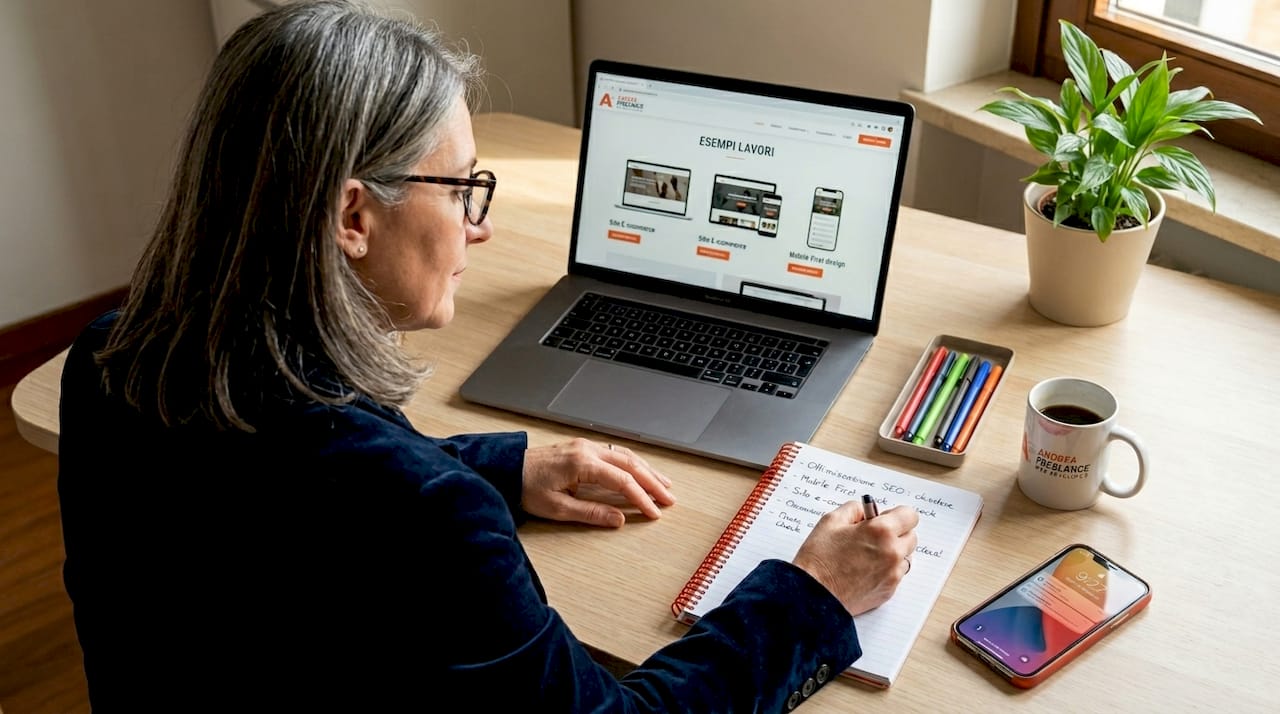
A well-curated portfolio speaks volumes more than any promotional brochure. Ask to see websites created for businesses similar to yours, in the same sector or with similar objectives. Check that the websites are still online, fully functional and optimised. An agency that has worked with SMEs in your sector is already familiar with the specific challenges and can offer you more tailored solutions.
Specialisation in e-commerce and SEO
Not all web agencies are the same. Some excel in graphic design, others in coding, and others still in search engine optimisation strategy. For an SME looking to sell online, specialisation in e-commerce and SEO is not an option but a necessity. Check whether the agency is familiar with platforms such as WooCommerce or PrestaShop, whether it has experience with organic search campaigns, and whether it can show you tangible results in terms of traffic and conversions.
Tangible results and documented case studies
Be wary of anyone who only shows you screenshots of attractive websites. Ask for figures: how many monthly visits does that website generate? What is the conversion rate of the e-commerce site they’ve developed? How much has a specific client’s Google ranking improved? A reputable agency has figures to show, not just images.
Transparency in the process and in costs
Before starting any project, you should receive a detailed quote setting out each cost item: development, design, SEO, maintenance, hosting, and any plugins or licences. Unexpected charges on the invoice are the clearest sign that you’re working with the wrong partner. See also the A guide to choosing a web agency to help you work out what questions to ask before making a decision.
Communication and ongoing support
A website is not a product that you simply hand over and then forget about. It requires updates, monitoring, technical support and ongoing optimisation. Make sure the agency offers a clear maintenance plan, guaranteed response times and a dedicated point of contact. Regular communication is often what distinguishes a positive experience from a frustrating one.
Here is a quick list of the main criteria to check:
- Portfolio featuring examples from your sector
- Specific expertise in SEO and e-commerce
- Case studies with measurable data
- A transparent and detailed quote
- Post-launch support plan
- A dedicated point of contact and clear response times
- Contract specifying ownership of the domain and its content
Pro tip: Before meeting with an agency, draw up a list of specific questions: “How many websites have you built in my sector?”, “What SEO results have you achieved over the last 12 months?”, “Who manages the project on a day-to-day basis?”. The answers will tell you straight away whether you’re dealing with serious professionals.
Now that we’ve clarified the criteria, let’s take a look at which web agencies truly meet the needs of SMEs.
The most effective web agencies for SMEs: profiles and benefits
The web agency market in Italy is highly fragmented. You’ll find large organisations with dozens of employees, small local studios, specialist freelancers and digital agencies covering the full spectrum of online marketing. For an SME, it is essential to understand which type of provider best suits its needs. A A professional website is essential for the company’s credibility, and the partner you choose directly determines the quality of the end result.
Here are the four main profiles, along with their respective strengths:
1. Local web agencies
Local agencies offer an advantage that is often underestimated: physical proximity. Being able to meet the team in person, visit their offices and build a direct relationship creates a level of trust that is difficult to replicate from a distance. They often have a deep understanding of the local economic landscape, the competitors in your sector within your geographical area, and the specific characteristics of the regional market. For SMEs with a strong local focus, this is a real competitive advantage.
2. Specialised freelancers
An experienced freelancer combines flexibility, cost-effectiveness and, often, a very high level of specialisation in a specific area. Whether you need a WordPress expert, an SEO specialist or a WooCommerce developer, a freelancer with years of experience can offer quality comparable to that of a large agency at significantly lower costs. The only limitation is availability: a single professional has limited resources and may not be suited to very complex projects or those with very tight deadlines.
3. Specialised courses in e-commerce
If your main aim is to sell online, an agency specialising in e-commerce is the most effective choice. These professionals have in-depth knowledge of platforms such as WooCommerce, PrestaShop and Shopify; they know how to optimise the checkout process to reduce abandoned trolleys; and they manage integrations with payment, stock and dispatch systems. The professional website design E-commerce-focused roles require very specific technical skills that not all generalists possess.
4. Partners with expertise in SEO
An agency or professional with solid SEO expertise doesn’t just build a visually appealing website: they build a website that Google loves. This means an optimised technical structure, fast loading speeds, content designed to capture the search queries of your potential customers, and a link-building strategy that remains consistent over time. SEO does not produce immediate results, but it is the investment with the best return in the medium and long term for an SME.
Qualities to look for in every profile:
- Local agencies: willingness to meet in person, knowledge of the local market, verifiable local references
- Freelancer: specialised portfolio, documented reviews, clear contract setting out deadlines and deliverables
- E-commerce studies: experience with specific platforms, success stories with sales data, expertise in UX and conversion optimisation
- SEO partner: transparent reports, white-hat methodologies (ethical techniques approved by Google), continuous monitoring of rankings
Pro tip: Don’t choose a candidate based on the agency’s name or size. Choose based on demonstrable results in your specific context. A freelancer with 15 years’ experience in e-commerce may be a better choice than a large generalist agency for an online sales project.
Now that we have identified the different types, let’s see how they compare in terms of specific business needs.
Comparing web agencies: which solution is right for your business?
Choosing between a local agency, a freelancer and a specialist firm is not a matter of personal preference. It is a strategic decision that depends on your budget, your objectives and the complexity of the project. Corporate web services vary enormously in terms of approach, costs and expected results.
| Profile | Average cost | Key strengths | Main limitations | Ideal for |
|---|---|---|---|---|
| Local agency | Medium/High | Proximity, direct relationship | Higher costs, less specialisation | SMEs with an average budget and a local focus |
| Freelancer | Low/Medium | Flexibility, specialisation, costs | Limited availability, risk to continuity | Specific projects, limited budget |
| E-commerce consultancy | Medium/High | Technical expertise, sales optimisation | Less focus on brands and content | SMEs focused on online sales |
| SEO Partner | Medium | Organic visibility, qualified traffic | Results are not immediate | SMEs with a long-term vision |
| Full-service agency | High | Comprehensive cover, a dedicated team | High costs, less customisation | SMEs with large budgets and complex projects |
Cost-benefit analysis for SMEs
Cost is often the first factor that SMEs consider, but it should be the last. A website built on the cheap by an unqualified professional can end up costing you much more in the long run: redesigns, loss of search engine ranking, technical issues, abandoned shopping baskets. Always consider the total cost of ownership, not just the initial quote.
Take these factors into account in your economic analysis:
- Initial development cost
- Monthly maintenance fee
- Cost of software licences (CMS, plugins, themes)
- Monthly SEO investment
- Potential cost of a future redesign if the website does not perform well
The development of e-commerce websites It requires specific skills that justify a higher investment, because a poorly designed e-commerce site does not generate sales. And an e-commerce site that does not generate sales is simply a cost, not an asset.
“Choosing a web agency is not an expense to be taken lightly. It is an investment that should be optimised.”
Strengths to highlight when making your choice
Every SME has its own unique characteristics. A small craft workshop has different needs to a manufacturing company with 50 employees. Before making a choice, define the following precisely:
- What is your main objective? Visibility, online sales, lead generation?
- Do you already have a website to update, or are you starting from scratch?
- What is your realistic budget for the next 12 months?
- Do you have in-house resources to manage content and updates?
Comparing options helps you understand which specific solution is likely to deliver the expected results. Let’s now look at how to choose based on the specific needs of your SME.
Practical advice and mistakes to avoid when choosing your web agency
Having analysed the criteria and profiles, it’s time to take action. There are some very common mistakes that SMEs make when choosing a web agency, and knowing about them in advance will help you avoid them. The Website redesign and maintenance improve performance online over time, but only if the chosen partner has the skills to do it properly.
Mistakes to avoid at all costs
- Choose solely on the basis of the lowest price. The cheapest quote rarely delivers the best result. It often conceals undisclosed additional costs or a lack of expertise.
- Do not check the references. Always ask for the contact details of at least two or three previous clients and get in touch with them directly. The testimonials on the agency’s website are hand-picked; direct conversations give you the true picture.
- Neglecting post-project support. Many SMEs realise too late that the agency they have chosen does not offer support once the website has been delivered. An unresolved technical issue can cost them sales and damage their reputation.
- Don’t read the contract. Always check who owns the domain, the content and the source code. Some agencies retain ownership of critical elements, making it difficult to switch partners in the future.
- Relying on promises of immediate results in SEO. Organic search ranking requires months of consistent work. Anyone who promises a top spot on Google within a few weeks is almost certainly using risky techniques that could harm your website.
- Do not set measurable targets. Before you start, set clear KPIs: how many monthly visits do you want to achieve? What is your target conversion rate? Without defined objectives, you cannot assess whether the agency is performing well.
Practical recommendations for making an informed choice
The A practical guide to web development For entrepreneurs, it recommends following a structured process. Here are the most important steps:
- Set out your objectives before meeting with any agency
- Draw up a written brief setting out the characteristics of your business and your audience
- Ask for at least three comparable quotes for the same project
- Assess the quality of communication right from the very first interactions
- Ask for a project plan with clear milestones and deadlines
- Check that the agency uses analytics tools such as Google Analytics and Search Console
Pro tip: Pay attention to how quickly an agency responds to your initial enquiries. If it takes them days to reply to an email before the project has even started, just imagine what will happen when you have an urgent problem after delivery.
An important point to bear in mind
According to industry analysis, over 60 per cent of Italian SMEs that have invested in a professional website and a structured SEO strategy have seen a measurable increase in turnover in the 18 months following the investment. This figure confirms that choosing the right partner is not a matter of aesthetics but of economics.
Following these practical tips, it is important to have a well-informed view on the subject of web agencies.
Our take on web agencies: what you’re often not told
After more than 20 years working in web development, I’ve seen many SMEs make the same mistakes. And the most frustrating thing is that these mistakes could have been avoided with just a little more information. What agencies often don’t tell you is just as important as what they do tell you.
The myth of the “all-inclusive” solution”
Many agencies sell “all-inclusive” packages as if they were the ideal solution for every business. The reality is quite different. A standard package cannot meet the specific needs of a manufacturing SME, a niche e-commerce business or a professional looking to generate qualified leads. Customisation is not a luxury: it is essential for achieving real results.
I’ve seen companies spend thousands of euros on websites built using generic templates, optimised for no specific sector, with SEO structures copied from other projects. The result? Websites that look great but are invisible on Google and fail to convert visitors into customers.
The real value lies in customisation
An effective website for an SME is not simply a “good-looking” site. It is a tool built around the company’s specific objectives, the behaviour of its target audience, and the keywords that its potential customers use to search for products or services online. Building such a site requires time, dialogue and a deep understanding of the client’s business.
When I work with an SME, the first thing I do isn’t to open Photoshop or start coding. It’s to ask questions. Lots of questions. Who are your ideal customers? What makes them choose you over a competitor? What is your current sales process? These answers define the site’s architecture, not the latest design trends.
The importance of ongoing dialogue
Another thing that is rarely spoken of openly is that the success of a web project depends to a large extent on the quality of the collaboration between the client and the agency. The SMEs that achieve the best results are those that actively participate in the project, provide timely feedback, share information about their business and treat the agency as a strategic partner, rather than as a supplier from whom to expect a finished product.
The agency brings technical expertise. You bring your knowledge of your market. When these two things come together effectively, results follow. When there is a lack of dialogue, even the best-designed project struggles to deliver.
Positioning is monitored over time
Finally, an uncomfortable truth: SEO is not a one-off task. It is an ongoing process that requires monitoring, adjustments and a constant investment over time. SMEs that treat search engine optimisation as a box to tick, rather than a strategy to nurture, rarely see lasting results.
Through our first-hand experience in digital services, we have learnt that the most satisfied companies are those that have chosen a partner with whom to build a long-term relationship, rather than simply a supplier for a one-off project. This mindset makes all the difference.
Discover bespoke web solutions for your SME
You now have the tools to assess web agencies with a critical eye and make an informed choice. The next step is to find the right partner to turn this knowledge into tangible results for your business. On andreafreelance.com You’ll find bespoke solutions for every need: from e-commerce development for SMEs with WooCommerce and PrestaShop, at SEO solutions for SMEs to increase organic visibility, up to a practical guide to e-commerce For those who want to understand every stage of the process before investing. With over 20 years’ experience and an approach focused on measurable results, you can count on genuine support from the planning stage right through to growth.
Frequently Asked Questions about web agencies
What are the benefits of using a web agency for an SME?
A web agency offers specialist expertise and bespoke solutions to enhance a business’s digital presence and boost sales; professional web services enable SMEs to compete effectively in the digital marketplace without having to manage complex technical skills in-house.
How do I choose the web agency best suited to the needs of my SME?
Assess their experience, portfolio, area of specialisation and the clarity of their processes and costs, and always ask for examples of results they have achieved; remember that a professional website is the cornerstone of a company’s online credibility and is worth a well-considered investment.
Why is it important to choose an agency that specialises in e-commerce and SEO?
Specialist agencies provide the technical expertise and strategies essential for boosting conversions and online visibility; building e-commerce websites requires specific knowledge of platforms, UX and optimising the purchasing process – knowledge that generalists often lack.
What common mistakes should I avoid when choosing a web agency?
Avoid basing your decision solely on price, ignoring post-project support, and placing your trust in a provider without verifying their actual expertise using measurable data; the website redesign and maintenance workflow is an integral part of the service and should be assessed before choosing a partner.